


Topics
In your maritime business,

Are you facing any of these challenges?
To drive business growth and prepare for the future, it is essential to address environmental regulations while improving profitability through the effective use of data.


With rising labour and fuel costs, as well as increasing environmental penalties,
the gap in profitability across the industry continues to widen.

strategic partners is becoming essential.

By leveraging an evolving open data platform that
consolidates a wide range of data,
seawise enables advanced
operations using
AI and data science — without requiring
significant investment or resources.
seawise provides a fully integrated solution:
 Led by specialists with real-world,
on-site expertise in shipbuilding and ship operations.

Why seawise?
-
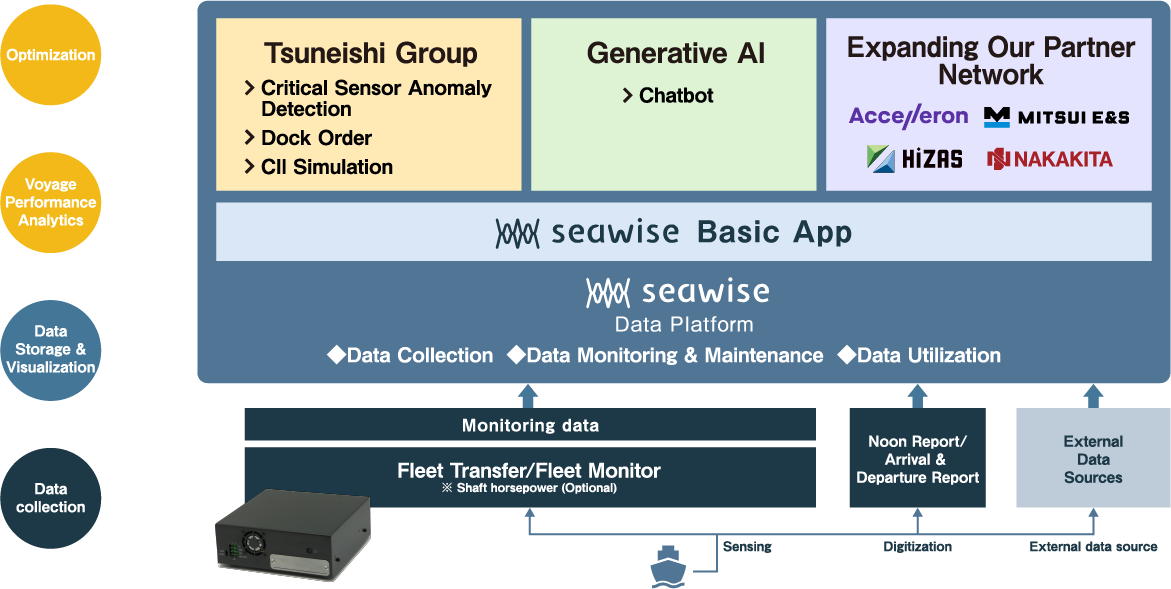
Structure We provide end-to-end support, from data collection and monitoring to analysis and performance optimisation.
-
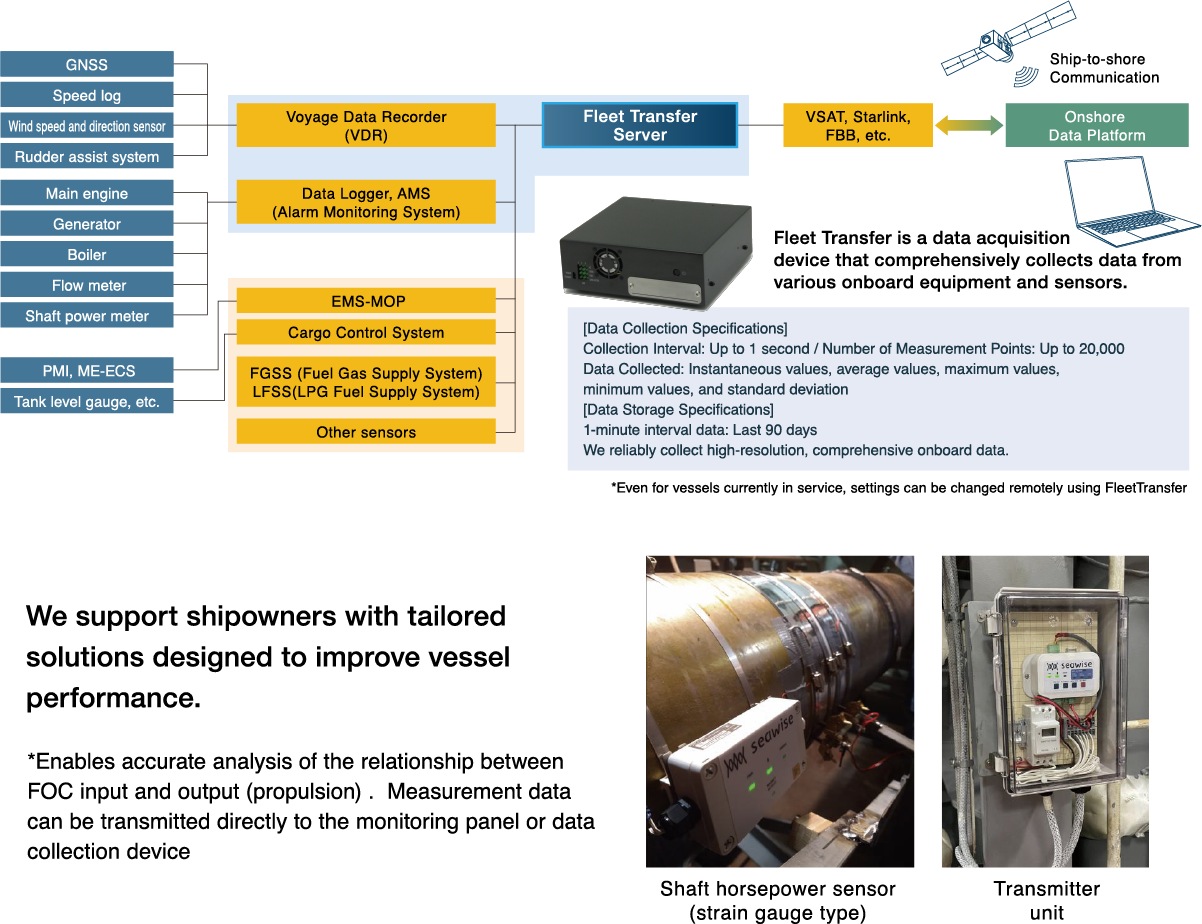
Data Collection Automatic acquisition of high-frequency data from the vessel
-
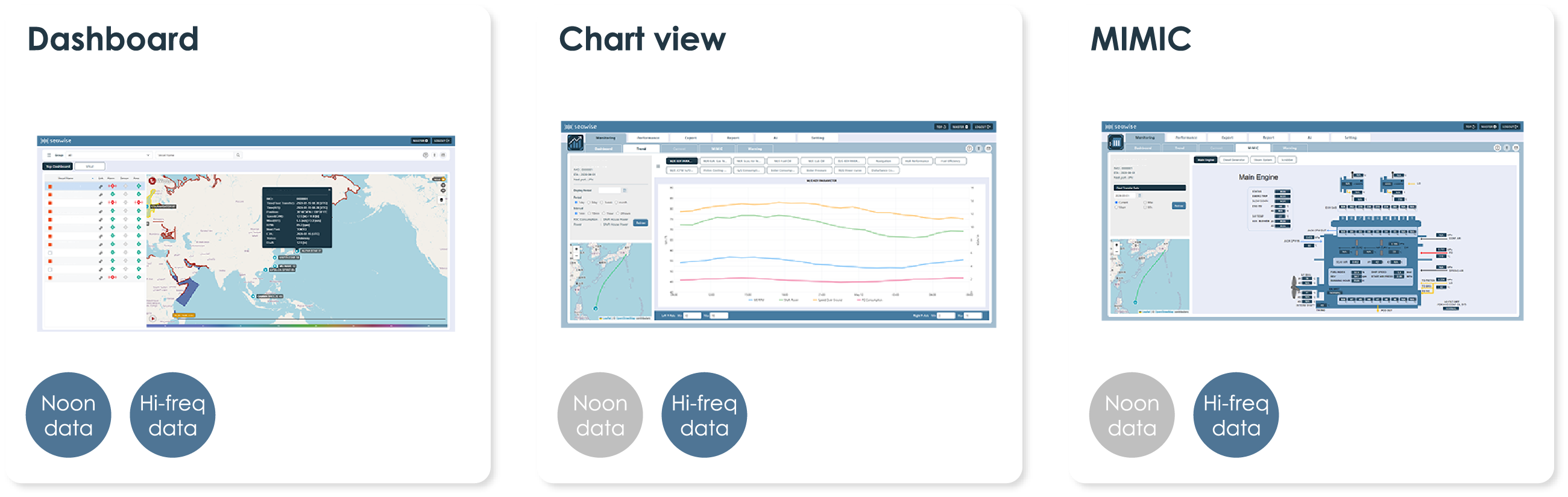
Visualization on shore Basic App (Sample Screens Shown)
-
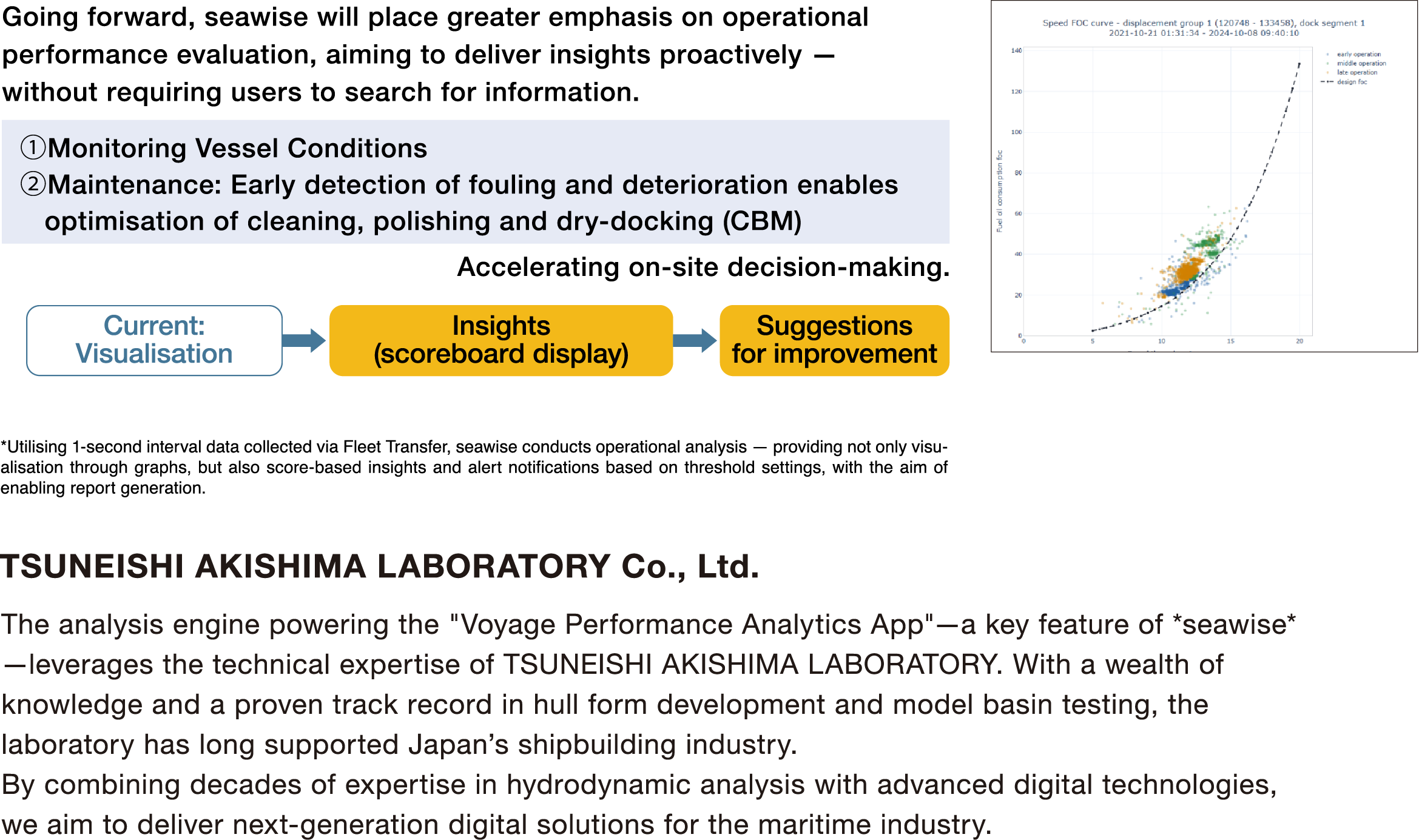
Analysis Voyage Performance Analytics
-
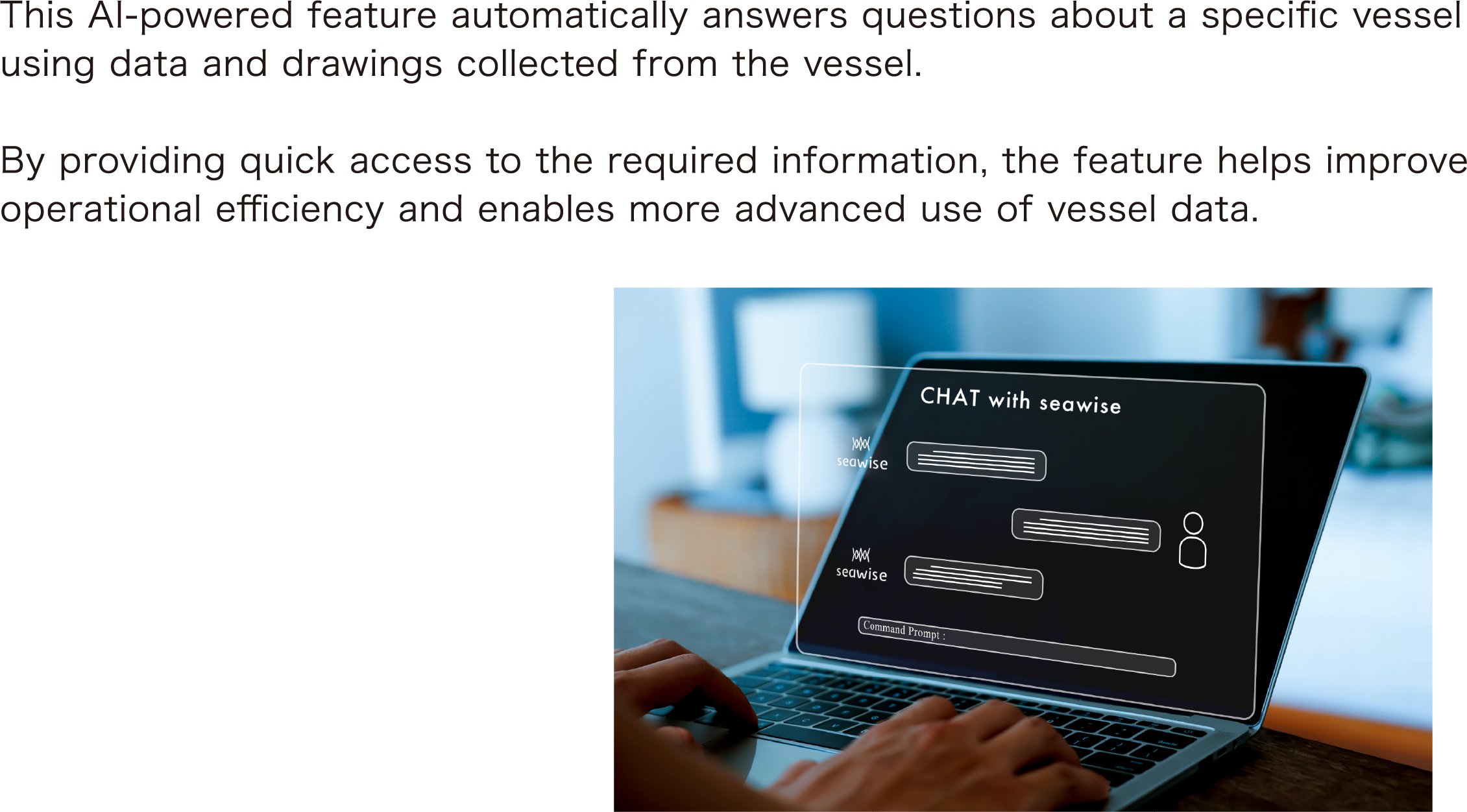
Performance Improvement Recommendations AI Chatbot Helps Improve Operational Efficiency
FAQ
Service
What kind of service is seawise?
seawise is a maritime data platform that standardizes and stores operational data collected from vessels, making it available for onshore visualization and integration with external services. By combining data collection via high-frequency data acquisition devices such as Fleet Transfer, viewing and monitoring through the Basic App, and external integration via APIs, it provides a foundation for "collecting, organizing, connecting, and utilizing" vessel data.
How can seawise help users make use of vessel data?
Operational and machinery data distributed across individual vessels can be viewed centrally from shore. Users can monitor fleet status, search and compare historical data, and integrate the data with external systems through APIs. We are also expanding data analytics and AI-assisted decision-support capabilities based on the data collected.
How widely has seawise been deployed?
seawise and Fleet Transfer, a high-frequency data acquisition unit, have been adopted primarily for newbuild vessels constructed by TSUNEISHI SHIPBUILDING Co., Ltd. Fleet Transfer has been selected for approximately 600 vessels to date. seawise is used by shipowners and ship management companies in Japan and overseas. Specific case studies can be shared upon request, subject to confidentiality and disclosure restrictions.
Read more Close
Implementation
Can it be installed not only on newbuilds, but also on existing vessels in service?
Retrofitting existing vessels in service is also possible. Because the connection methods and required work vary depending on the configuration of existing systems such as Alarm Monitoring Systems (AMS), Voyage Data Recorders (VDR), machinery equipment, and onboard LAN, we will propose an implementation method after checking the target vessel's equipment and interfaces.
Can seawise be used even on vessels not equipped with Fleet Transfer?
Yes. Even if Fleet Transfer is not installed, data obtainable from existing data collection devices or onshore systems can sometimes be integrated into seawise. We will examine connection feasibility and methods on a case-by-case basis after checking the output specifications and APIs of the existing systems.
Can we start with a trial or PoC (Proof of Concept)?
Depending on the project and target functions, starting with a trial or PoC is possible. We will discuss the implementation details after confirming the target vessel, use cases to be verified, required data, timeframe, and division of roles.
Can Fleet Transfer be installed on any vessel type?
Yes. It can be installed regardless of the vessel type. When installing Fleet Transfer, the data logger (DL) requires a reboot during software updates. Therefore, for oil tankers such as VLCCs, the work must be carried out while in drydock or at anchorage.
Can Fleet Transfer be installed on domestic coastal vessels as well?
Yes, installation is possible. Even if there is no VDR or DL, depending on the onboard equipment status and after discussing the data the customer wishes to collect, we can consider methods to connect equipment and sensors directly to Fleet Transfer.
Please tell us the lead time, onboard installation time, and whether hot work is required.
As a standard guideline, the lead time is approximately 2 months, and the installation work takes 1 to 2 days. No hot work is required.
Can we obtain a class notation by installing seawise?
There is a track record of obtaining a DSS notation for vessels equipped with Fleet Transfer. Regarding other notations, individual confirmation is necessary depending on the relevant class requirements.
Can you accommodate customization at the time of implementation?
Yes, customization is possible. You can flexibly consult with us regarding sensor data collection frequency, retention periods, data destination settings, handling of power outages, and other conditions according to the vessel and operational requirements.
Data Collection and Communication
What kind of vessel data can be collected, and at what frequency?
Various data obtainable from onboard equipment, such as main engines, generators, boilers, fuel flow meters, navigation data, and position information, are targeted. Fleet Transfer can handle a maximum of approximately 20,000 data points at high frequency, and acquisition intervals are set according to data or connection specifications.
Can data be acquired from existing onboard equipment and systems?
Yes, it is possible. However, connection feasibility depends on the communication specifications of the equipment concerned, whether the manufacturer makes the data available, and the existing onboard LAN configuration.
How is data transmitted between ship and shore?
Data collected onboard is transmitted to the shore via ship-to-shore communication. We select the transmission method according to the vessel's communication environment and incorporate the data received on the shore side into seawise. Specific methods are designed after confirming existing communication facilities and operational conditions.
Can it be used on vessels without Starlink?
Starlink is not mandatory. It can also be used with existing internet connection environments such as VSAT or FleetBroadband (FBB), provided that the necessary communication conditions are met. We will propose an appropriate data transmission method according to each vessel's communication environment.
If communication is interrupted, is data lost?
If communication is interrupted, the data is temporarily stored and retransmitted once communication is restored. However, the retention period and retransmission conditions vary depending on the system configuration. Please contact us to confirm the applicable specifications.
Regarding onboard connections: Can the onboard LAN be used? Also, please tell us where Fleet Transfer is installed.
The existing onboard LAN may be used, depending on its configuration. If necessary, we will review the vessel’s onboard equipment in advance and propose the most suitable connection method. The installation location of Fleet Transfer can be determined flexibly based on the vessel’s equipment layout. We have installed Fleet Transfer in various locations, including on a shelf on the bridge and in the engine control room (ECR).
Can sensors be directly connected to Fleet Transfer? Also, are additional sensors sometimes required?
While the general method is to acquire necessary signals via the AMS, it is also possible to directly connect shaft power meters, flow meters, and various sensors to Fleet Transfer. The necessity of additional sensors is determined after checking existing equipment and the data you wish to acquire. If necessary, we will check connection feasibility with the equipment manufacturer on your behalf.
Which manufacturers' equipment can Fleet Transfer connect to? In particular, can it connect to Chinese manufacturers' or Kongsberg equipment, and is the manufacturer's consent required for data acquisition?
We have a track record of connecting with equipment from manufacturers both in Japan and overseas. Since connection feasibility depends on the target equipment's interface specifications and data output conditions, we check each case individually. If the manufacturer's cooperation or consent is required for data acquisition, sharing the manufacturer's contact information allows us to make inquiries on your behalf.
When using Fleet Transfer, where is the data stored onboard?
Data collected onboard is stored in a compact flash memory built into the Fleet Transfer unit itself.
How is onboard data transmitted to shore? Is it real-time transmission?
We will propose an appropriate transmission method utilizing SMTP or other means according to the vessel's communication environment. While it is possible to transmit data at intervals as short as 1 minute, the actual transmission interval varies depending on the communication environment and operational conditions.
What is the monthly ship-to-shore data traffic volume?
As a guideline, it is 20 to 40 MB per month per vessel (for a typical bulk carrier). The data size per file is approximately 20 to 40 KB.
API & External Integration
Can seawise integrate with existing ship management systems and external services?
Yes. seawise can integrate with existing ship management systems and external services, including analytics services and equipment manufacturers’ services, through APIs and other available interfaces, without requiring the replacement of existing systems. The feasibility and scope of integration depend on each external system’s API specifications and data export capabilities.
Can data be integrated between seawise and external systems using APIs?
Yes. seawise can provide data to external systems through its standard API. The import of data from external systems into seawise is considered on a case-by-case basis, depending on the external system’s API and data export specifications.
Can vessel data that has already been accumulated be utilized in seawise?
Potentially, yes. If the already accumulated data can be exported externally via files such as CSV or via API, we will check its format, items, frequency, etc., and consider methods for importing it into seawise.
Data Utilization & AI
Can data for the entire fleet or sister ships be compared and analyzed?
You can view and compare data across your fleet and among sister vessels, subject to the data available in seawise. The available comparison metrics and analytical capabilities depend on the data collected and the features currently offered.
What can be done using AI?
Currently, we are developing an AI chatbot feature that allows users to search and check accumulated vessel data using natural language. In the future, we aim to expand AI features that connect data to decision-making, such as comparisons, trend identification, anomaly checking, and identifying possible causes.
Can it be used for early detection of anomalies and preventive maintenance?
Early detection of anomalies and preventive maintenance are areas that seawise aims to strengthen moving forward. We will guide you by separating currently available features from those under development, and discuss utilization methods according to the acquired data and target equipment.
Security
Who owns the vessel data, and is it ever provided to third parties?
Rights and the scope of use for vessel data are handled based on contracts or terms of service. Regarding provision to third parties, customer data is never provided without authorization except within the scope permitted by the contract. Please check your contract terms for details.
How is our data segregated from other customers’ data?
Each customer’s data is segregated from other customers’ data through account-based access controls and permission management. Users can access only the data authorized for their roles.
What measures are taken regarding cybersecurity and the safety of ship-to-shore communication?
We implement measures such as access control, authentication, and secure communications for ship-to-shore communications and data on the cloud. Specific configurations and compliance statuses regarding cybersecurity will be explained individually as needed.
Pricing & Support
Please tell us about the usage fees and contract structure.
seawise usage fees vary depending on the target services, number of vessels, and usage conditions. The basic fee structure and contract terms will be provided upon inquiry. Hardware costs for Fleet Transfer and other equipment may apply separately.
What kind of support is available after implementation?
In addition to initial setup and operational instructions at the time of implementation, we also respond to inquiries regarding the system and data after service begins. Specific support scopes, response hours, and procedures for equipment failures will be provided according to the contract details.
Corporate Guide About our company
- Company Name
- seawise Co., Ltd.
- Address
- 7F, Dai-ichi Life Hibiya First Building
1-13-2 Yurakucho, Chiyoda-ku
Tokyo 100-0006 - Contact Tel
- 090-1135-7108
- Management team
- Managing Director Yuichi Hatanaka
- Our Business Activities
- Development and operation of a vessel data platform
History
- November 2022
- Founded
- April 2023
- Launch of Basic App service
- January 2024
- First hardware installation project (for retrofit)
- April 2024
- Exhibited at Sea Japan
- September 2024
- Implemented our system on a newbuild at an overseas shipyard in China.
- January 2025
- Began installing our system as standard equipment on newbuilds for TSUNEISHI SHIPBUILDING Co., Ltd.
- March 2026
- Moved our head office to Hibiya
Philosophy
-
Company Policy
- As a unique data platform provider that utilises AI technology to convert operational data into value, we contribute to the advancement and sustainable growth of the entire maritime industry.
-
Our Mission
-
-
1
We focus on ensuring data reliability and security.
We securely store and manage our customers’ navigational data, providing peace of mind with our trustworthy data infrastructure. -
2
Through open collaboration, we strive to maximise value for our customers.
We actively collaborate with partner applications and external partners to rapidly deliver services that directly address our customers’ challenges. -
3
Our strong background and expertise generate tangible value.
Leveraging real-world insights from shipbuilders and shipping companies, we provide services including operational efficiency improvements, equipment fault detection and dock system integration. By enhancing the safety, economic efficiency and reliability of our customers’ vessels, we maximise their asset value.
-
1
Contact
Please use the button below to contact us.
We will review your enquiry and respond to you.
*We do not accept sales or promotional enquiries.
 Click here